
Getting in
- Haneda, on Tokyo Bay, is close to the city: the Keikyū line runs towards Shinagawa and the Tokyo Monorail to Hamamatsuchō, both connecting with JR lines in well under an hour.
- Narita, in Chiba, is much further out. The Keisei Skyliner reaches Nippori and Ueno in around 40 minutes; JR's Narita Express runs to Tokyo Station, Shinjuku and Shibuya. Cheaper Keisei trains and airport buses take longer.
Check which airport your flight uses before booking your first night: the two are on opposite sides of the city.
Getting around
Tokyo's trains are run by several companies: JR East, Tokyo Metro, Toei and private railways. A rechargeable Suica (sold by JR) or PASMO (sold by the subway and private lines) card works on all of them and on buses, and saves working out fares from Japanese-only fare maps. The two are interchangeable for travel; refunds are handled by the company that sold the card.
- Queue at the marked lines on the platform and let passengers off first.
- Talking on the phone in trains is frowned upon; set it to silent mode.
- Rush hours are intense, roughly 7:30 to 9:30 on weekday mornings. Avoid them with large luggage.
How the city fits together
The JR Yamanote line runs a loop around central Tokyo, and many districts are named after its stations:
- Shinjuku: government towers, department stores and one of the world's busiest stations; the narrow lanes of Golden Gai and Omoide Yokochō sit next to the skyscrapers.
- Shibuya and Harajuku: the famous scramble crossing, youth fashion, and the forested Meiji Jingū shrine beside the station.
- Ueno: a large park with the Tokyo National Museum and other museums, and a mass of cherry trees in spring.
- Tokyo Station and Marunouchi, next to the Imperial Palace grounds, with Ginza's shopping streets a short walk away.
Asakusa and Sensō-ji
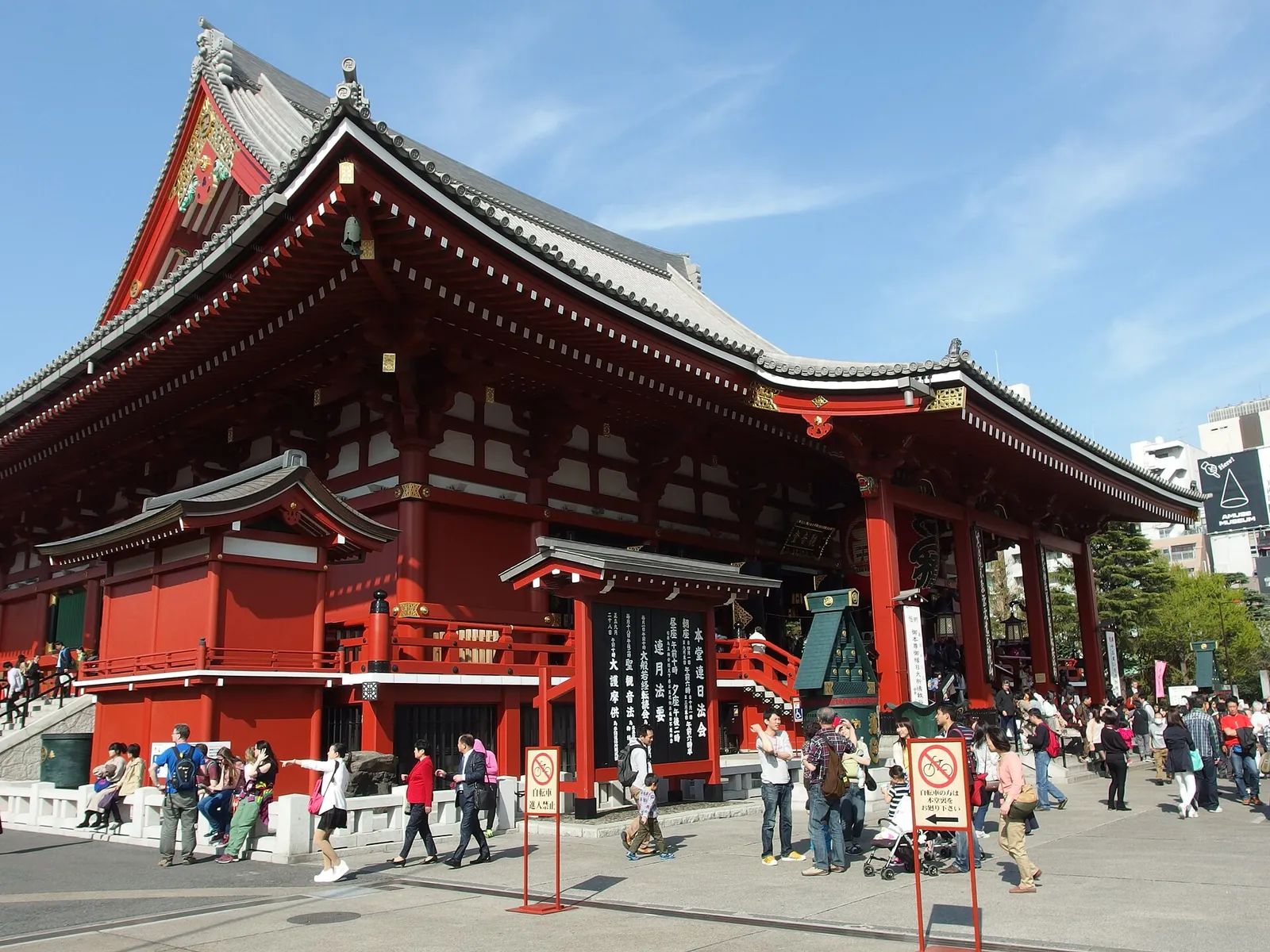
Off the loop, in the north-east, Asakusa keeps more of the old town's atmosphere. Sensō-ji, by tradition founded in the 7th century, is the city's oldest temple: you enter through the Kaminarimon gate with its giant lantern and walk up Nakamise-dōri, a shopping street of snack and souvenir stalls, to the main hall. It is busiest in the middle of the day; the grounds are open early and lit in the evening. The Tokyo Skytree stands across the Sumida River.
When to go
- Spring: plum blossom from late February, cherry blossom in late March and early April.
- Early summer: the rainy season, from late May through June, brings a month of overcast skies and showers.
- Summer: July and August are hot and very humid, with daytime highs typically around 31 °C. Typhoons are possible from late summer into autumn.
- Autumn and winter: mostly dry and clear; winter is cold but rarely snowy.