
Getting in from Heathrow
Three rail links run from Heathrow to central London. All accept contactless bank cards and Oyster cards.
| Link | Goes to | Notes |
|---|---|---|
| Elizabeth line | Paddington, then straight through central London to the City and Canary Wharf | A good balance of speed and price; no change needed for much of the centre |
| Heathrow Express | Paddington, non-stop | The fastest, about 15 minutes; only 10 to 15 minutes quicker than the Elizabeth line but much dearer at the walk-up fare |
| Piccadilly line (Underground) | Knightsbridge, Piccadilly Circus, King's Cross | The cheapest and slowest, with many stops |
Other airports: Gatwick Express and Thameslink trains from Gatwick, Stansted Express to Liverpool Street, and the Luton DART shuttle to Luton Airport Parkway station. Eurostar trains from Paris and Brussels arrive at St Pancras International.
Paying for transport
Tap the same contactless bank card or phone in and out on the Underground, Elizabeth line, Overground, DLR and most rail services in London; on buses you only tap in. Transport for London caps what you pay in a day and in a week, so a paper Travelcard is rarely worth buying. Each traveller needs their own card or device, and tap the same one in and out: a different card at the exit counts as an unfinished journey. Transport for London
Mind the ticket gates at your destination: keep the card you tapped in with until you are out of the station.
Museums with free entry
The permanent collections of the national museums are free; temporary exhibitions usually charge. Among them:
- British Museum, Bloomsbury: the Rosetta Stone and the Parthenon sculptures.
- National Gallery, Trafalgar Square: European painting from the 13th to the early 20th century.
- Tate Modern, in a former power station on the South Bank.
- Victoria and Albert Museum, Natural History Museum and Science Museum, side by side in South Kensington.
Some popular museums ask you to book a free timed ticket at busy times; check the museum's site the day before.
Along the river
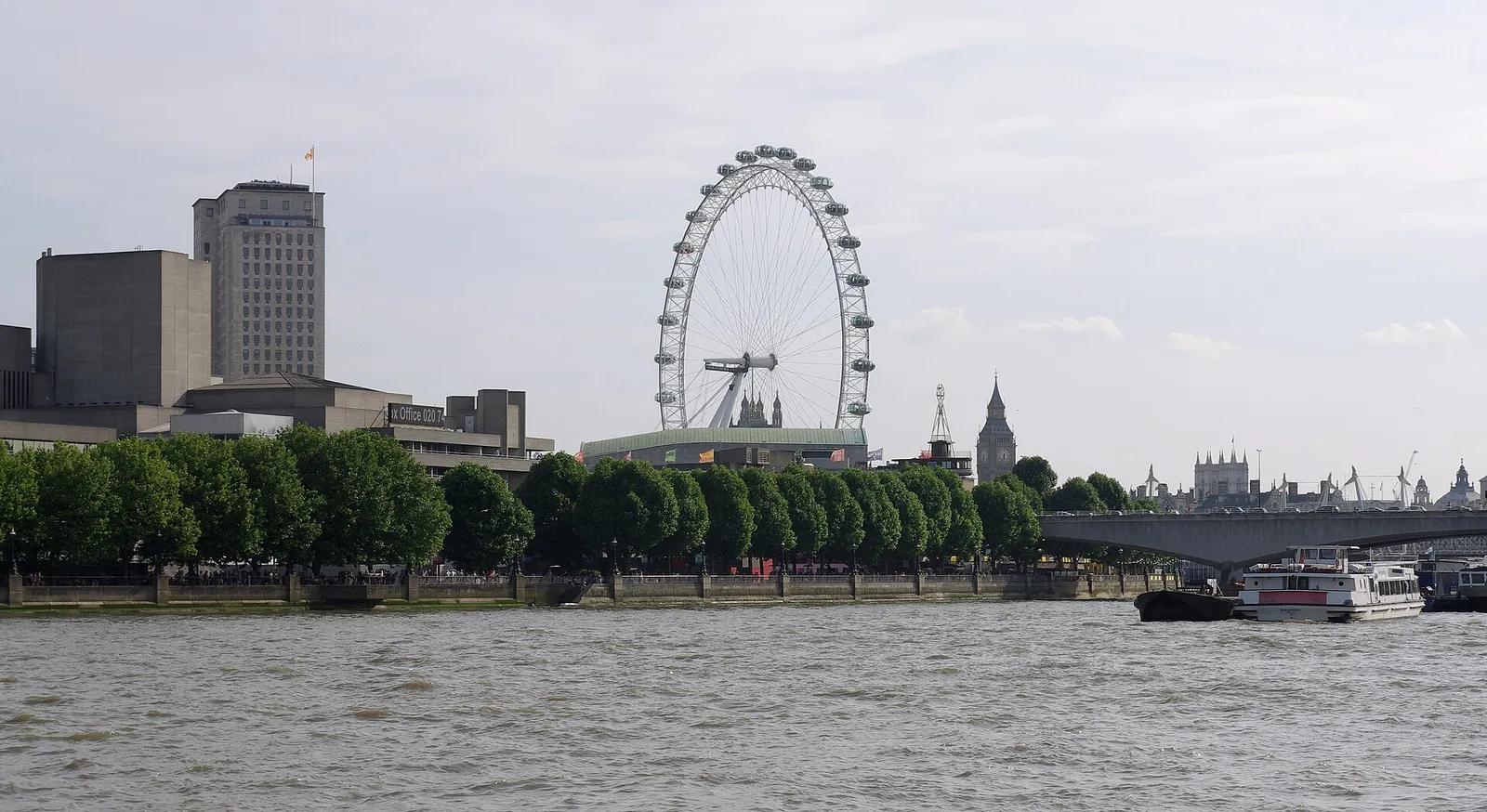
The South Bank path between Westminster Bridge and Tower Bridge is the easiest way to see the centre on foot: the London Eye, the Southbank Centre, Tate Modern, Shakespeare's Globe and Borough Market, then the Tower of London across the water. At night the bridges and the City skyline are lit; a walk from the London Eye to Tower Bridge takes about an hour without stops.
Markets and Soho
- Borough Market, by London Bridge, one of the oldest food markets in the city. It is busiest at weekend lunchtimes.
- Soho, between Oxford Street and Leicester Square, is the centre's densest grid of restaurants and bars. Kingly Court, off Carnaby Street, gathers small restaurants around a courtyard.
- Hyde Park and Kensington Gardens make one green belt of about 2.5 km from Marble Arch to Kensington Palace.
When to go
London is mild for most of the year and rarely very cold or very hot, but rain is possible on any day. Summer brings the longest days and the most visitors; school holidays fill the museums. The Underground can be hot in summer, because many older lines have no air conditioning.