
Getting in
Copenhagen Airport is in Kastrup on the island of Amager. Two rail links run from Terminal 3:
- Metro line M2 (station upstairs from the arrivals hall): trains every few minutes during the day and about every 15 minutes at night, 14 minutes to the city centre.
- Regional trains (station under the arrivals hall) to Copenhagen Central Station, and on across the Øresund Bridge to Malmö.
Both need a ticket for three fare zones from the city centre. Buy it from the machines in the arrivals hall, or in the official DOT ticket app. Copenhagen Metro
Getting around
The metro is driverless and runs 24 hours a day, with four lines: M1 and M2 share a track through the centre, M3 is the City Circle line (including the Central Station), and M4 serves the harbour. The red S-trains cover the suburbs. Doors on the metro close on time; wait for the next train rather than squeezing in.
The Copenhagen Card includes public transport across the capital region and entry to dozens of museums and sights, for 24 to 120 hours. It pays off only if you plan several paid visits a day; many museums are cheap or free on some days. Visit Copenhagen
Copenhagen is one of the most cycled cities in the world, with separate cycle tracks on most main streets. As in Amsterdam, the traffic is fast and orderly: signal before you stop or turn, and do not stand in the cycle track.
The centre in a day
- Strøget, the long pedestrian street, runs from the City Hall Square to Kongens Nytorv.
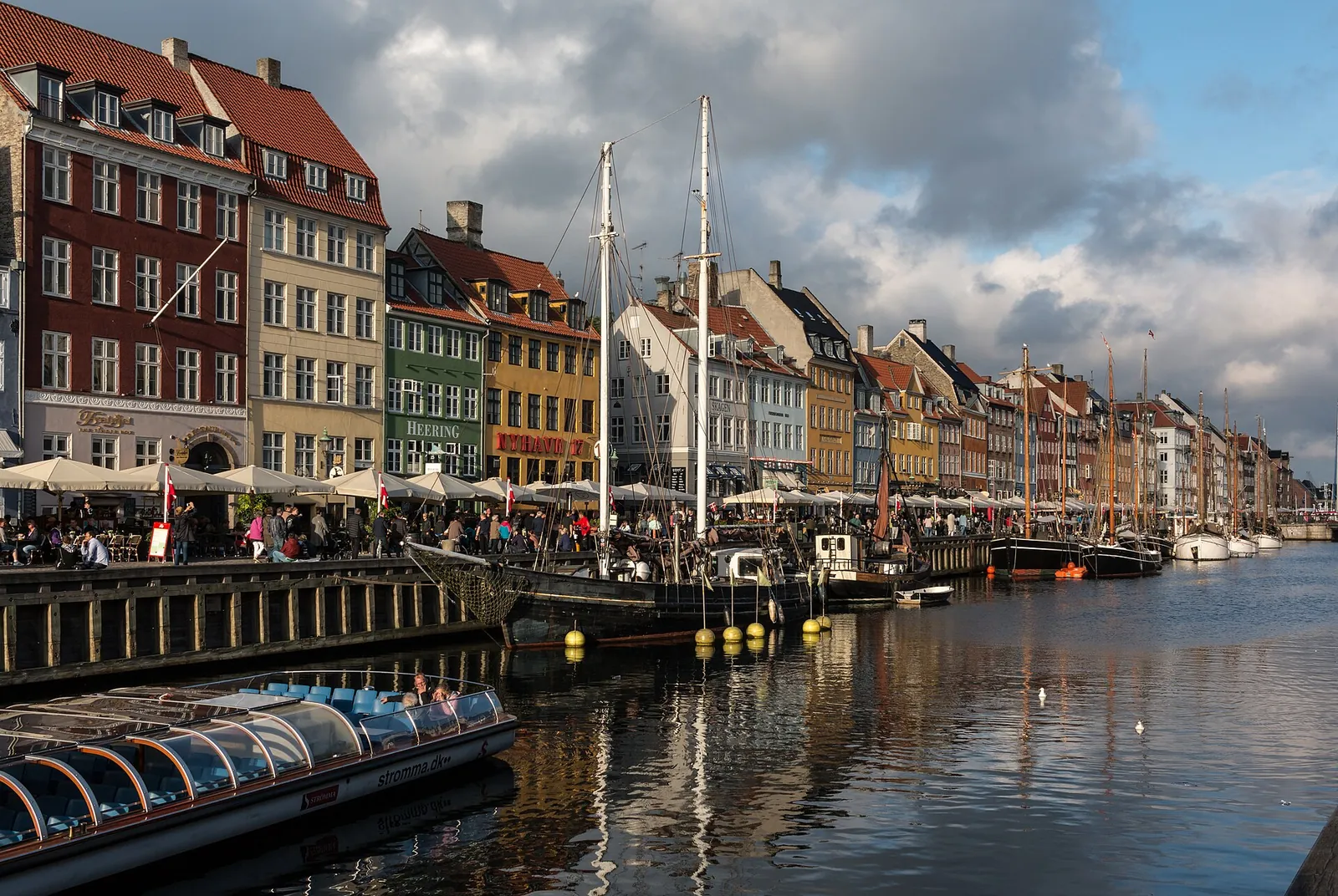
- Nyhavn, the 17th-century harbour lined with coloured townhouses and old wooden ships, is where most canal boat tours start.
- Amalienborg, the royal residence, with the changing of the guard at noon, and the marble dome of Frederik's Church behind it.
- Rosenborg Castle and the King's Garden, home of the crown jewels.
- The Little Mermaid, Edvard Eriksen's statue based on Hans Christian Andersen's tale, unveiled in 1913 on the Langelinie promenade. It is smaller than most people expect.
Tivoli and Christiania
Tivoli Gardens, opposite the Central Station, opened in 1843 and is one of the oldest amusement parks still running. It opens in seasons rather than all year, including Halloween and a Christmas market; check the dates before you plan around it.
Christiania, in Christianshavn, is a self-governing community that has occupied a former naval area since the 1970s, with home-built houses, workshops and music venues. Residents ask visitors not to take photographs in some areas; respect the signs.
A day trip to Sweden
Regional trains cross the Øresund Bridge from the Central Station and the airport to Malmö in about 40 minutes, several times an hour. Sweden uses its own currency, the krona, but cards are accepted almost everywhere. Carry your passport or ID card: border checks on this crossing have been introduced and lifted several times in recent years.
When to go
Summer is the high season, with long light evenings and swimming in the harbour baths. Winter days are short; December brings Christmas markets, including the one in Tivoli. The weather changes quickly in every season, so pack for rain.