
Getting in
Most international flights for Kyoto land at Kansai International Airport in Osaka Bay. The JR West Haruka limited express leaves from the station opposite the arrivals hall and reaches Kyoto Station in 75 to 80 minutes. Foreign visitors can buy discounted Haruka tickets and regional rail passes with a passport; the offers change, so compare them on JR West's site before you fly. JR West
From Tokyo, the Tōkaidō Shinkansen reaches Kyoto in a little over two hours.
Getting around
A rechargeable ICOCA card works on trains, subways and buses across the Kansai region; cards from other regions, such as Tokyo's Suica, are accepted too. City buses reach most temples but are slow and crowded at peak times; combining the subway and JR or private railway lines with walking is often faster. Kyoto is flat in the centre and good for cycling, but parking a bike is allowed only in marked areas.
Kiyomizu-dera and the eastern hills
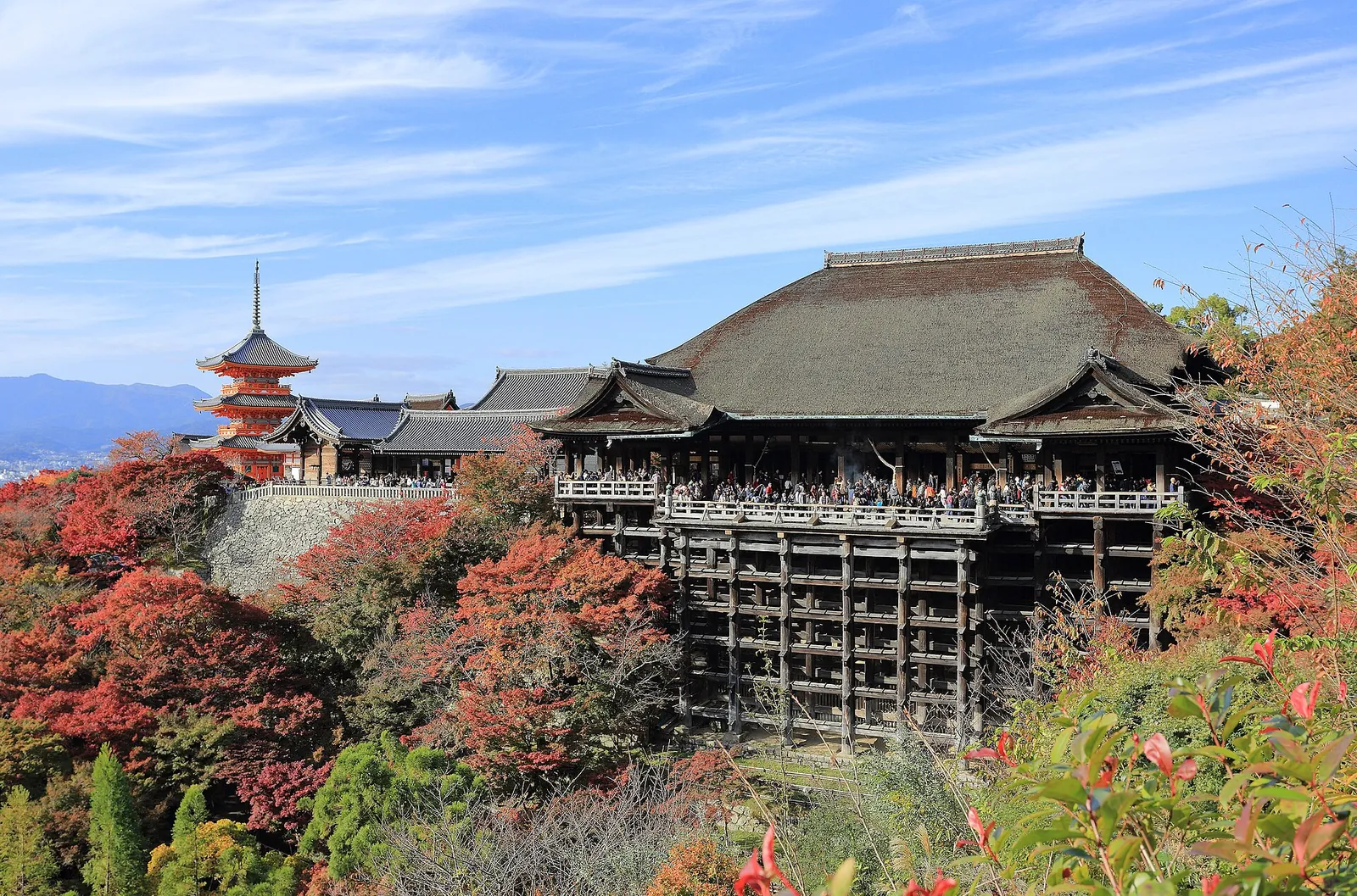
Kiyomizu-dera stands on the slopes of Mount Otowa. According to its founding legend it dates from 778; the present main hall was rebuilt in 1633, with a wooden stage built out over the hillside on tall pillars. It is part of the Historic Monuments of Ancient Kyoto World Heritage Site. The streets leading up to it, Kiyomizu-zaka and the stepped lanes of Sannen-zaka and Ninen-zaka, are lined with old shops and are busiest from late morning; go early.
From there, a walk north through the Higashiyama district passes Kōdai-ji and the Yasaka Shrine to Gion, the old entertainment quarter. Gion's private lanes are not a photo set: local rules ban photography in some of them, and residents ask visitors not to follow or stop geiko and maiko in the street.
The Kyoto International Manga Museum
In the centre of the city, the museum occupies the former Tatsuike Primary School, founded in 1869 as one of Kyoto's district schools. It holds a large collection of manga and related material, much of it on open shelves that visitors can sit and read on the lawn or in the old classrooms. It is run with Kyoto Seika University. Kyoto International Manga Museum
Staying in a ryokan
A traditional inn is one of the main reasons to stay in Kyoto rather than visit for the day. Shoes come off at the entrance; the room has tatami mats and futons laid out in the evening; dinner and breakfast are often served in the room or in a private dining room at a set time. Shared baths are washed in before you get in, not in the tub itself. Check whether tattoos are allowed in the shared baths if that applies to you.
A day trip to Himeji
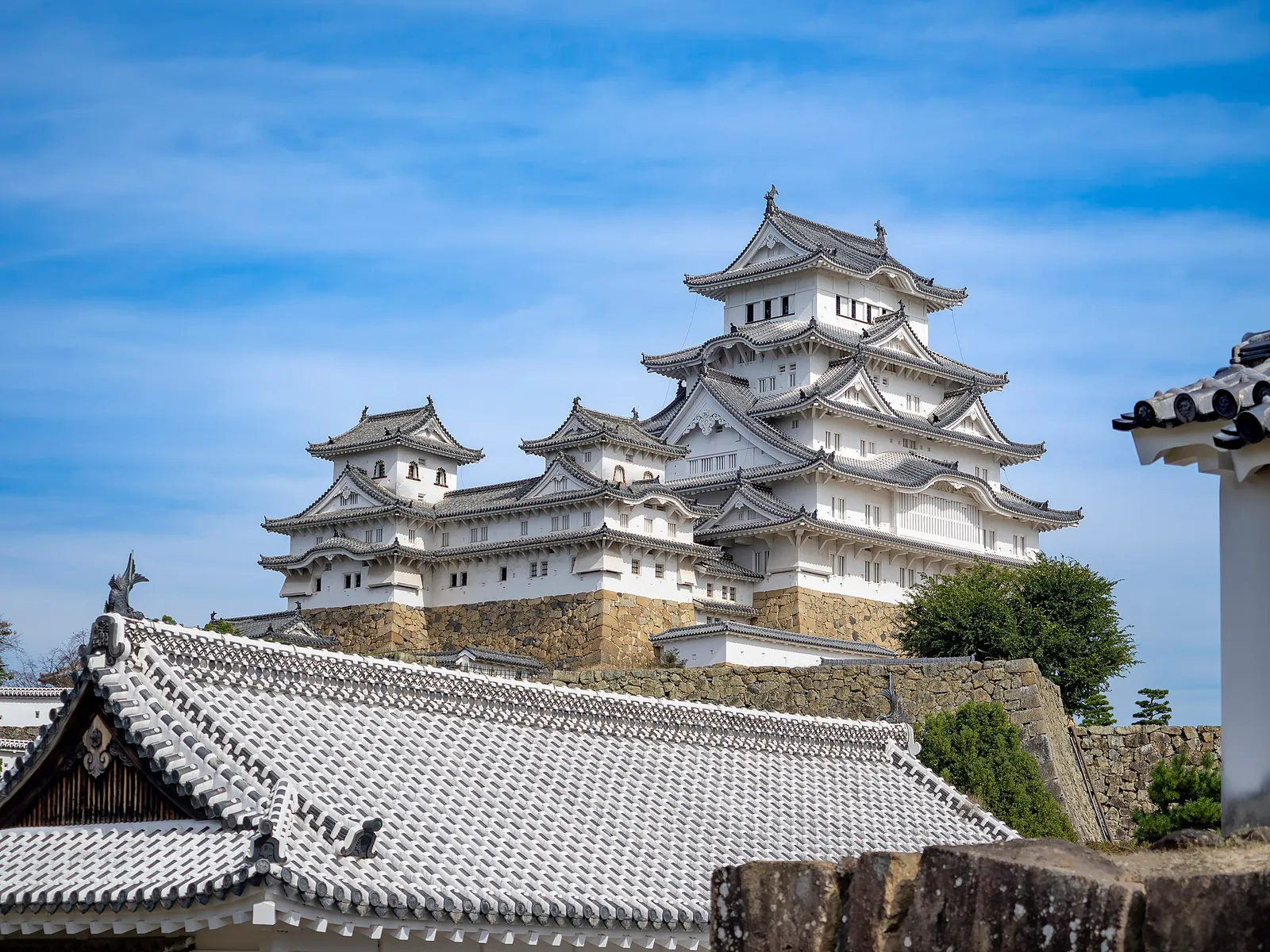
Himeji Castle, nicknamed the White Egret, was rebuilt in its present form between 1601 and 1609. In 1993 it became one of the first places in Japan on the UNESCO World Heritage List, and reopened in March 2015 after several years of restoration that returned its roofs to bright white. It is a 15-minute walk north from Himeji Station. Himeji Castle
- Admission since 1 March 2026: ¥2,500 for adults (18 and over) from outside Himeji, ¥1,000 for Himeji residents, free under 18. A combined ticket with the Kōkoen Garden costs ¥2,600.
- Entry to the main keep is limited to the first 15,000 visitors each day, and visitor numbers inside are capped at busy times.
- From Kyoto, the Shinkansen to Himeji takes under an hour; the cheaper JR Special Rapid takes about an hour and a half.
When to go
Cherry blossom (usually late March to early April) and autumn leaves (usually mid-November to early December) are the most beautiful and by far the most crowded times. Summer is hot and humid, and the rainy season comes in June. Winter is cold but quiet, and the temples are at their calmest.