
Getting in
- Orly: since 24 June 2024 metro line 14 runs from the airport into the city, reaching Châtelet–Les Halles in about 25 minutes. It replaced the Orlybus, according to the regional transport authority, Île-de-France Mobilités.
- Charles de Gaulle: the RER B suburban line runs from both terminal areas to Gare du Nord, Châtelet–Les Halles and the Latin Quarter. Trains can be crowded at rush hour; keep your luggage close.
- By train: Eurostar from London arrives at Gare du Nord. High-speed trains from the south-east use Gare de Lyon, from the south-west Montparnasse.
The RER B and RER D share the tunnel between Gare du Nord and Châtelet; if one line is disrupted, the other often still runs.
Getting around
The metro and RER are run by the RATP and SNCF under the regional authority Île-de-France Mobilités. Line 14 is automatic and the fastest across the centre. For a few days, a rechargeable Navigo Easy card loaded with single tickets or a day pass saves queuing at machines. Walking between neighbouring districts is often quicker than changing lines.
The Seine and the islands
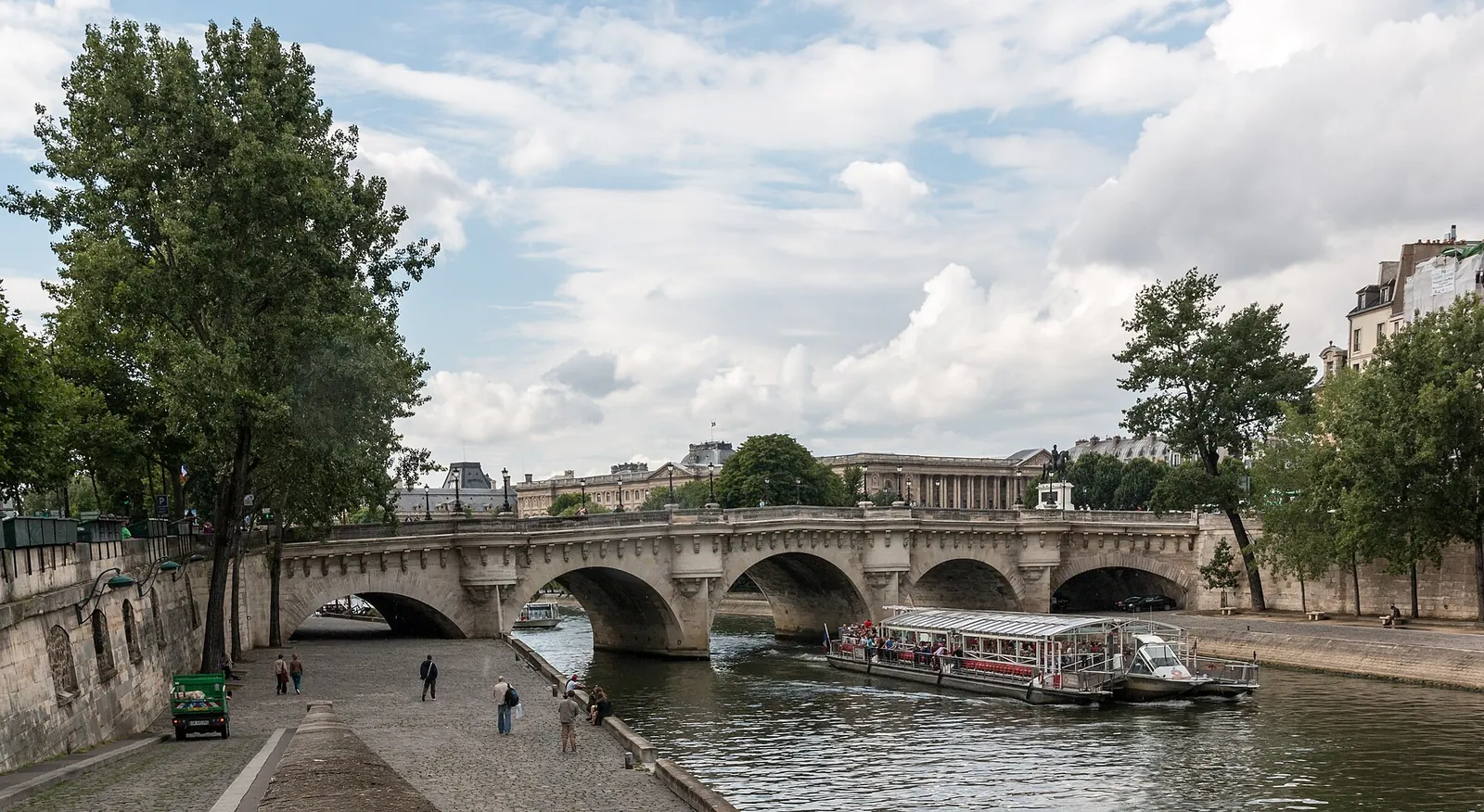
The oldest part of Paris is the Île de la Cité, where the Pont Neuf, despite its name the oldest standing bridge in the city, crosses both arms of the river. The quays along the Seine between the Eiffel Tower and the Île Saint-Louis are a UNESCO World Heritage Site and the best long walk in the city; the green boxes of the bouquinistes, the riverside booksellers, line the walls near Notre-Dame.
Notre-Dame reopened in December 2024 after the 2019 fire. Entry to the cathedral is free; at busy times you can reserve a free time slot online to skip the queue.
Museums and sights
- The Louvre: plan a route before you go. The Mona Lisa room is crowded from opening time; the rest of the museum is vast and much quieter.
- Musée d'Orsay, in a former railway station across the river: Impressionist and Post-Impressionist painting.
- Eiffel Tower: tickets for the lifts and stairs are sold online by the tower's operator; the view from the Trocadéro across the river is free.
- Montmartre: the hill of the Sacré-Cœur, with steps or a funicular from the bottom. The streets behind the basilica are calmer than the square in front.
When to go
Spring and early autumn are the most pleasant. July and August are hot, and some smaller shops and restaurants close for the summer holidays. Rain is common in every season; a wet evening on the quays has its own appeal, but bring an umbrella.