
The Sognefjord
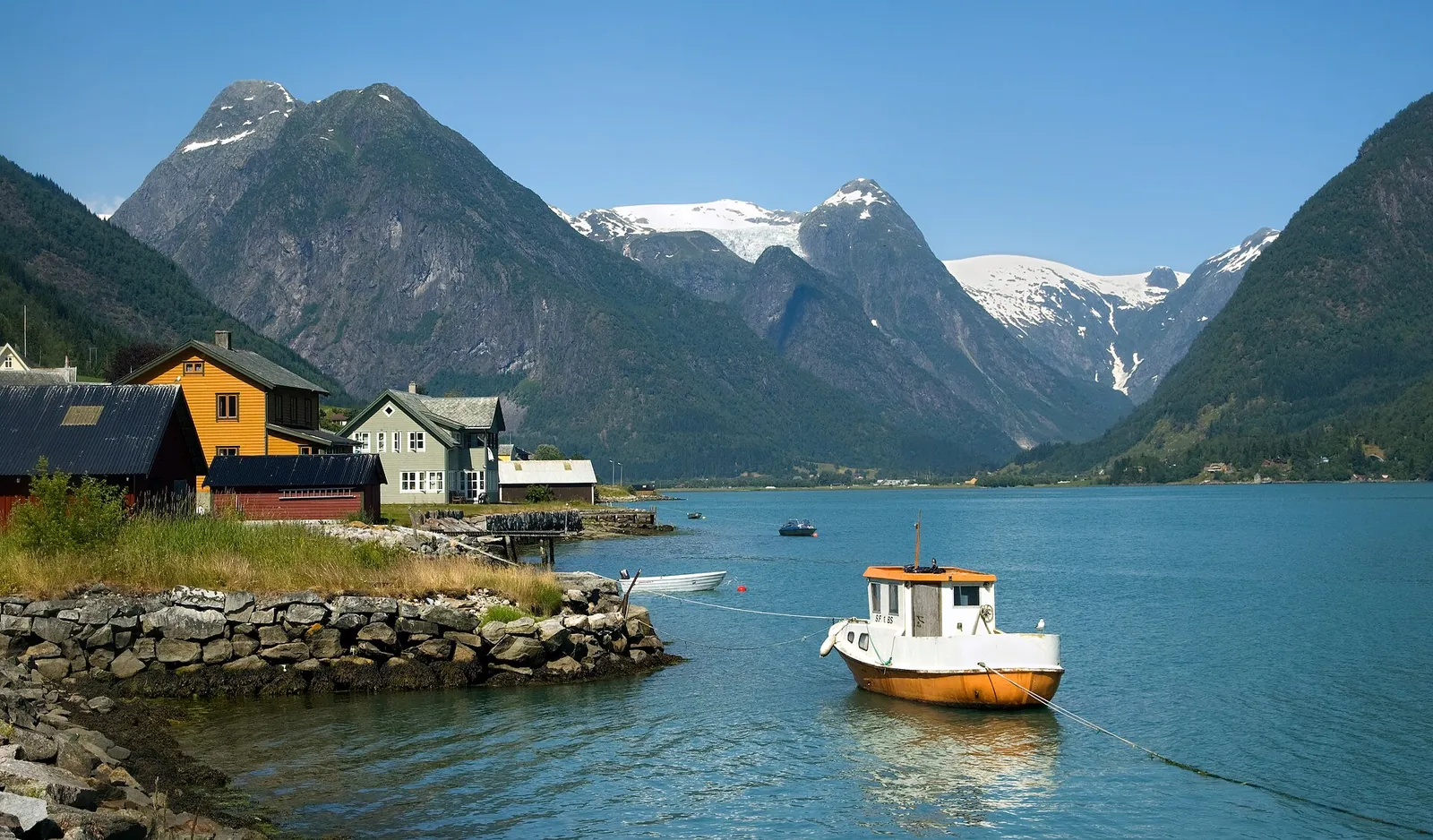
The Sognefjord is the longest fjord in Europe and the second longest and second deepest in the world, stretching more than 200 km from the islands on the coast to the mountains of Jotunheimen. Steep slopes rise straight from the water, leaving room for roads and villages only in the valleys. One of its arms, the narrow Nærøyfjord, is part of the West Norwegian Fjords World Heritage Site. Several of Norway's surviving stave churches stand around the fjord, among them the UNESCO-listed church at Urnes.
Getting there
- By boat: high-speed catamarans run from Bergen into the fjord several times a day, with more routes in summer. It is the most convenient way in, and the most scenic.
- By road: the E16 between Oslo and Bergen and the E39 between Bergen and Trondheim both cross the fjord region. Car ferries connect the shores.
- By rail: the Flåm Railway climbs from Flåm on the Aurlandsfjord to Myrdal on the Oslo–Bergen line.
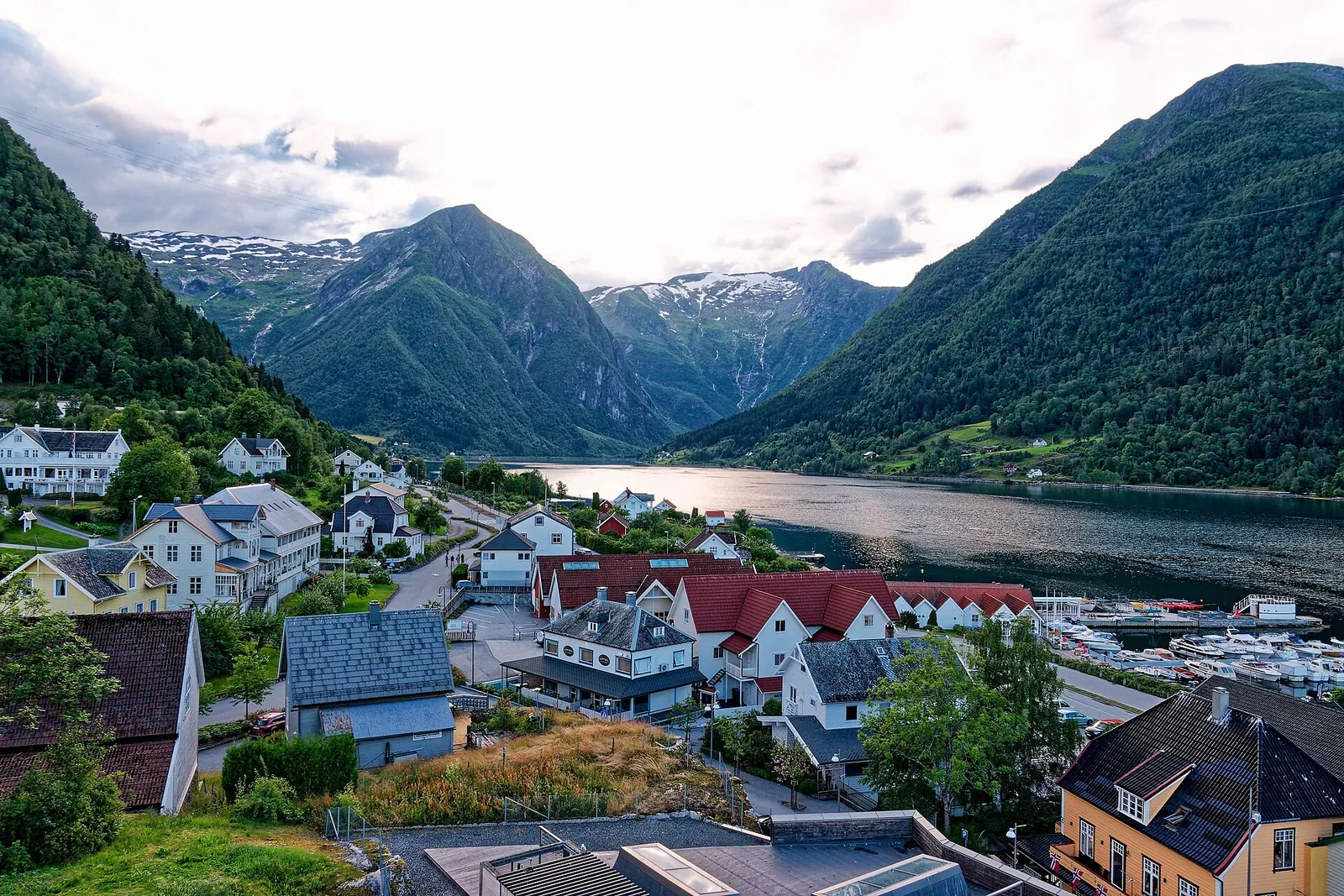
Balestrand, a classic old resort on the north shore, and Flåm, a busy cruise port, are the usual bases; Fjærland is reached from Sogndal or Balestrand.
Fjærland
Fjærland lies at the end of the Fjærlandsfjord, an arm of the Sognefjord, about 31 km from Sogndal along national road 5. For most of its history the only way in was by boat. A tunnel to Skei in Jølster opened in 1986, and the Frudal tunnel to Sogndal in 1994. In summer, tourist boats still sail up the fjord.
- The glacier arms: Bøyabreen and Supphellebreen are tongues of Jostedalsbreen, the largest glacier on the European mainland. Both can be seen from near the road; do not walk onto glacier ice without a guide.
- The Norwegian Glacier Museum (Norsk Bremuseum), designed by the architect Sverre Fehn, explains how glaciers and the climate work, with a climate centre added in 2007. Norsk Bremuseum
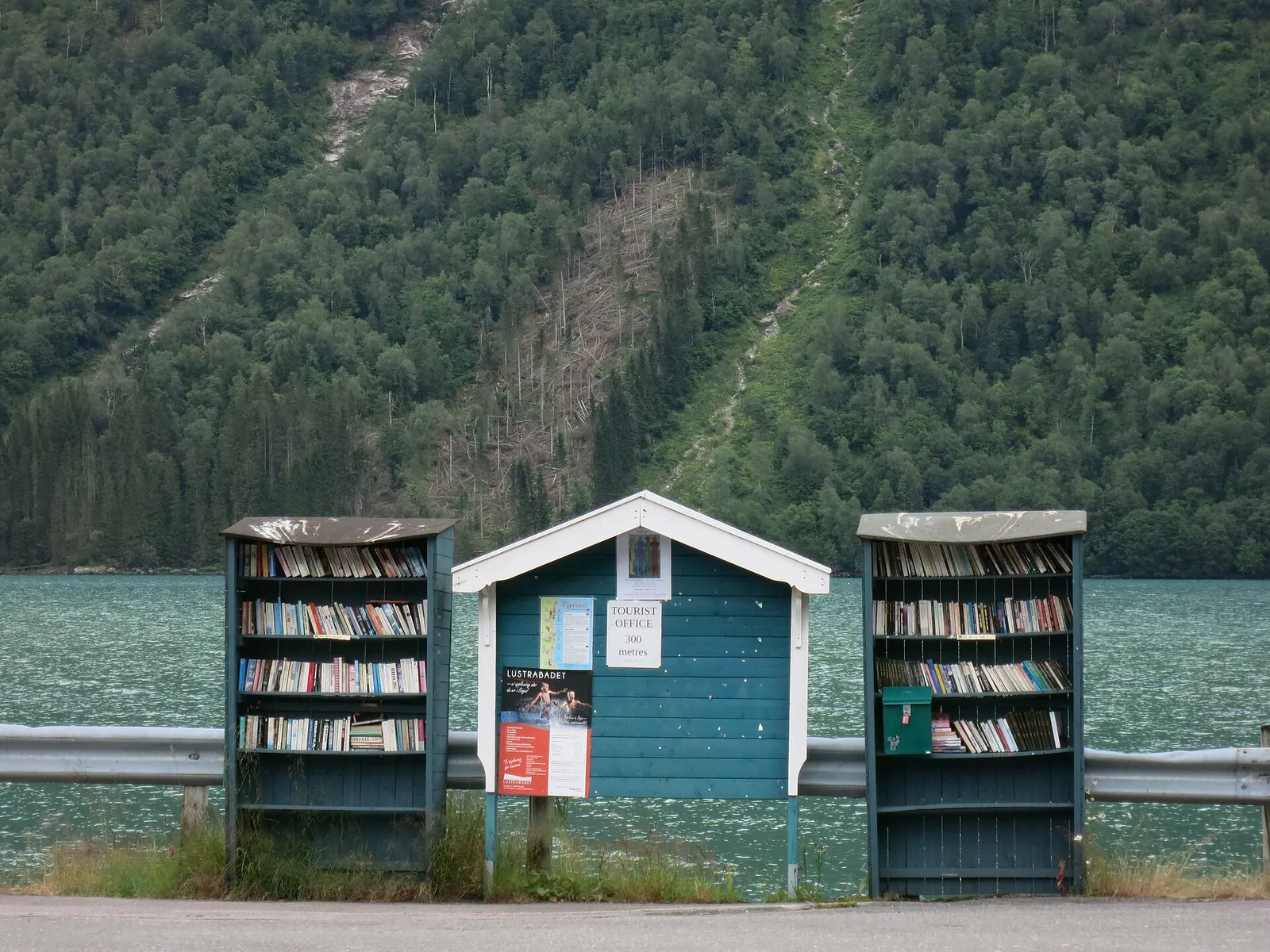
- The Norwegian Book Town (Den norske bokbyen): second-hand bookshops in old cowsheds and pigsties, on the ferry quay and in the 19th-century Hotel Mundal, and unstaffed book cabins along the road where you pay into an honesty box. Den norske bokbyen
When to go
June to August brings long days, the full summer timetable and the bookshops open. The weather in western Norway is changeable in every season and wet for much of the year; bring waterproofs and warm layers even in July. In winter the roads stay open but many attractions, boats and shops close.